


Save the Date
GSLS 2027
February 3-6, 2027
Paris Las Vegas
The 2026 Global Specialty Lens Symposium (GSLS), presented by Contact Lens Spectrum, was held January 7-10 at Paris Las Vegas. This year’s program hosted nearly 900 attendees, speakers, and industry representatives. Attendees hailed from 40 states throughout the country as well as 31 countries worldwide. Sessions covered all aspects of specialty contact lens wear.
The 2025 GSLS Education Committee was comprised of Jason J. Nichols, OD, MPH, PhD (chair); Jennifer Fogt, OD, MS (vice chair); Karen DeLoss, OD; Craig Norman; and Eef van der Worp, BOptom, PhD.
The 2026 schedule kicked off on January 7, with 4 preconference workshops. This year’s topics ranged from scleral lens troubleshooting, myopia grand rounds, orthokeratology strategies, and how to optimize your specialty lens practice.
This year’s program also featured 7 general sessions, 2 poster sessions, and 19 breakouts with an emphasis on all things specialty lenses, including prosthetic lenses, sclerals, higher-order aberration, myopia management, orthokeratology, keratoconus, corneal GPs, and more.
The first general session was comprised of a keynote speech by Craig W. Norman and Patrick J. Caroline that provided details about the evolution of the GSLS to its present day incarnation. Read a recap of the presentation here.
There were nearly 150 entries this year for scientific posters and free papers. Once again, GSLS held 2 poster sessions (one on Friday and one on Saturday) to allow for more interaction and learning with the authors. The posters presented this year are listed below. To view these or any of the other posters, visit the GSLS website.
In 2026, up-and-coming practitioners were showcased with the first-ever residents-only rapid-fire poster sessions (note: presenter’s name is shown in bold).
-
Jon Kuznia, OD, and Nicholas Gidosh, OD: Corneal GPs Reconsidered: An Option After Scleral Lens Intolerance in Severe Postrefractive Ectasia
-
Luis Ramirez, OD, and Anna-Kaye Logan, OD: The Unsung Hero of Pediatric Posttraumatic Aphakia and Aniridia: Corneal RGP Lenses
-
Christina Chapman, OD, and Ryan Terry, OD: Scleral Lens Modifications for the Management of Graft-Versus-Host Disease
-
Madison Thurmond, OD, and Boris Severinski, OD: Scleral Lens Fitting Strategies in Patients With Glaucoma Drainage Devices: A Case Series
-
Anna Konstantinidis, OD: All Eye, No Coverage: Impression-Based Scleral Lens for Exposure in Pfeiffer Syndrome
-
Amy Zheng, OD: Unconventional Orthokeratology Fitting in an Adult With High Corneal Astigmatism and History of Giant Papillary Conjunctivitis
-
Annie Dong, OD; Brandon Merrill, OD; and Jacquelyn Bongard, OD: Unilateral Hyperopic Orthokeratology Correction in Patients With Functionally Emmetropic Fellow Eyes
-
Amber Naqvi, OD, and Jennifer Harthan, OD: Beyond Bioptics: A Contact Lens Approach to Driving Clearance in a Teen With Albinism and Nystagmus
Additionally, the rapid-fire poster and free paper sessions were combined this year into a single 2-hour general session. In the first hour, 5 presenters provided details on their studies/projects. During the second hour, 8 speakers presented a snapshot of their posters.
Free Paper Presentations:
-
Langis Michaud, OD, MS: Prevalence of Corneal Irregularities in a Cohort of Young Myopic Patients
-
Matthew Keyzer, OD: Fluid Reservoir Composition in Keratoconus Patients Wearing Scleral Lenses
-
Jason Jedlicka, OD: A Custom Wavefront-Guided Scleral Lens System for Higher-Order Aberrations: Real-World Early Experience From a Retrospective Multicenter Case Review
-
Giancarlo Montani, DipOptom: Comparative Optical Performance of Myopia Control Soft Contact Lenses Using Modulation Transfer Function Analysis
-
Eef van der Worp, PhD, BOptom: The Tipping Point in Soft Lens Fitting
Rapid-Fire Presentations
-
Sandra Brook, OD: Rare Syndrome, Rare Solution: Scleral Lens Therapy in a 4-Year-Old With Pallister-Killian Syndrome
-
Patrick Simard, OD, MSc, MBA: Managing Recurrent Corneal Erosion With Scleral Lenses in a Reis-Bücklers Corneal Dystrophy (RBCD)
-
Nathan Schramm, OD, and Vincent Vu, OD: “My Bad Eye Can See Better Than My Good Eye Now!” Correcting Higher-Order Aberrations With Wavefront-Guided Scleral Lenses and Replicating Success the Following Year
-
Aaron Wolf, OD; Sheila Morrison, OD, MSc; and Alex Bennett, OD: A Case Series: Custom Wavefront Guided Scleral Lenses for Severe Corneal Irregularities
-
Jennifer Harthan, OD; Ellen Shorter, OD; Muriel Schornack, OD; Amy Nau, OD; Jennifer Fogt, OD, MS; and Cherie Nau, OD: Patient Reported Visual Fogging in Scleral Lens Wear vs Ocular Surface Disease Index (OSDI) Score
-
Alexa Le, BS, and Maria K. Walker, OD, PhD: Comparing Scleral Lenses With Different Oxygen Permeabilities in Keratoconus
-
Sharon Qiu, OD, and Chelsea Bray, OD: Empirically Fit Translimbal Orthokeratology for the Management of High Myopia
GSLS Awards
Established in 2013, the Award of Excellence is awarded by the Program Committee to a distinguished clinician, scholar, or scientist whose lifelong work has significantly advanced the field of contact lenses, especially specialty lenses. Honorees are recognized for contributions in development, clinical practice, education, knowledge translation, and scholarly activity that have moved the field forward in essential ways.
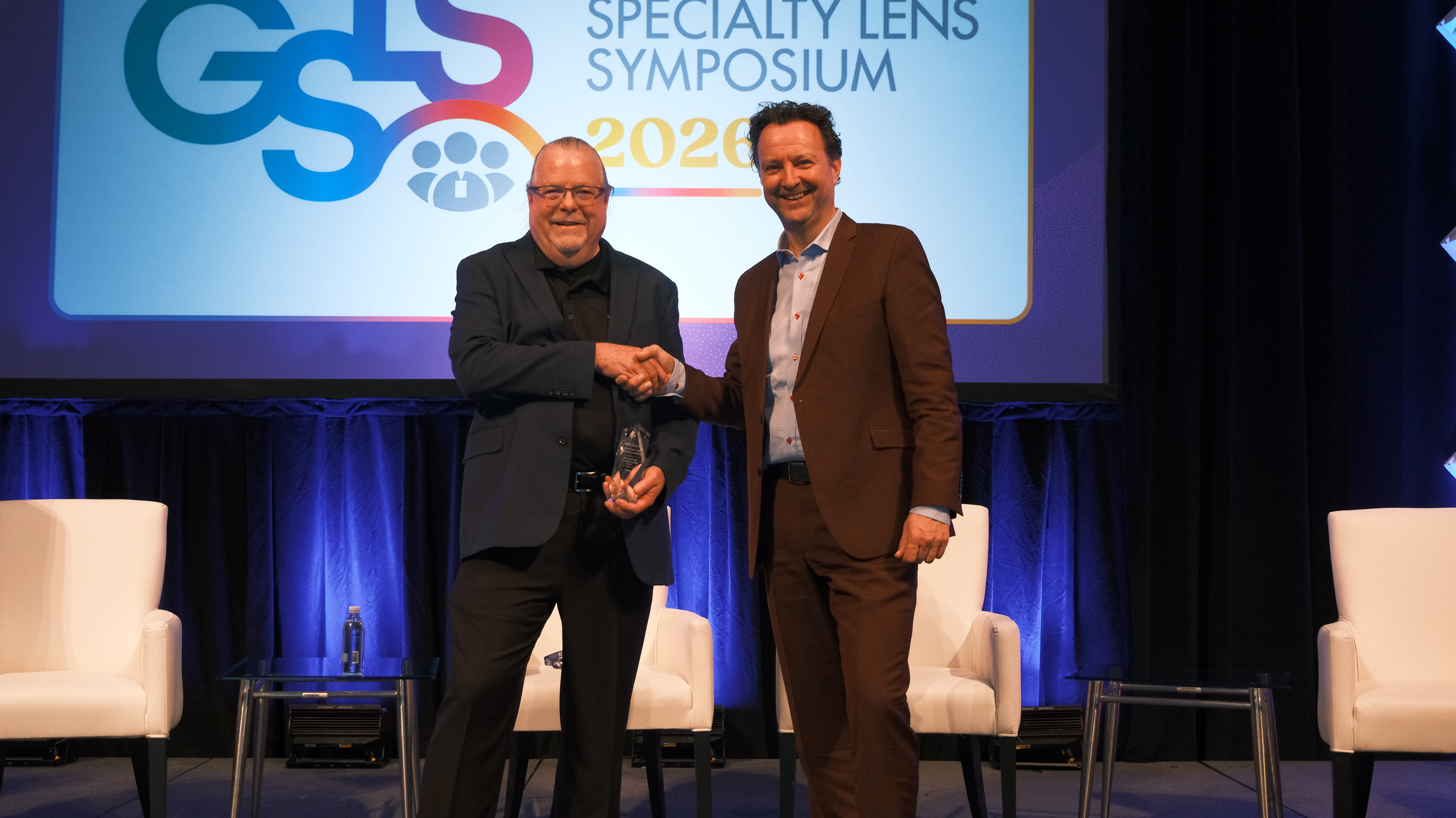
Recipient Patrick J. Caroline serves as associate professor at the Pacific University College of Optometry in Forest Grove, Oregon. He is a fellow and diplomat of the Cornea and Contact Lens Section of the American Academy of Optometry and co-curator of The Contact Lens Museum. He has received Lifetime Achievement Awards from both the American Academy of Optometry and the American Optometric Association.
For the past 30 years, he has served as a contributing editor for Contact Lens Spectrum. Caroline has published more than 360 papers, authored more than 150 scientific posters, and lectured extensively throughout the world.
The Rising Star Award, established in 2023, recognizes an emerging leader in cornea and contact lenses who demonstrates substantial contributions to the field, outside of what might normally be expected in an early phase of one’s career.
Recipient Maria K. Walker, OD, PhD, is a clinician scientist with a focus on keratoconus, childhood myopia, and specialty contact lenses. She graduated with an OD/MS from The New England College of Optometry in Boston, Massachusetts in 2013 and then completed a 1-year cornea and contact lens residency at Pacific University in Portland, Oregon. She joined the faculty at University of Houston College of Optometry (UHCO) in 2014 and went on to complete a PhD on the impact of a scleral lens on the eye in 2021.
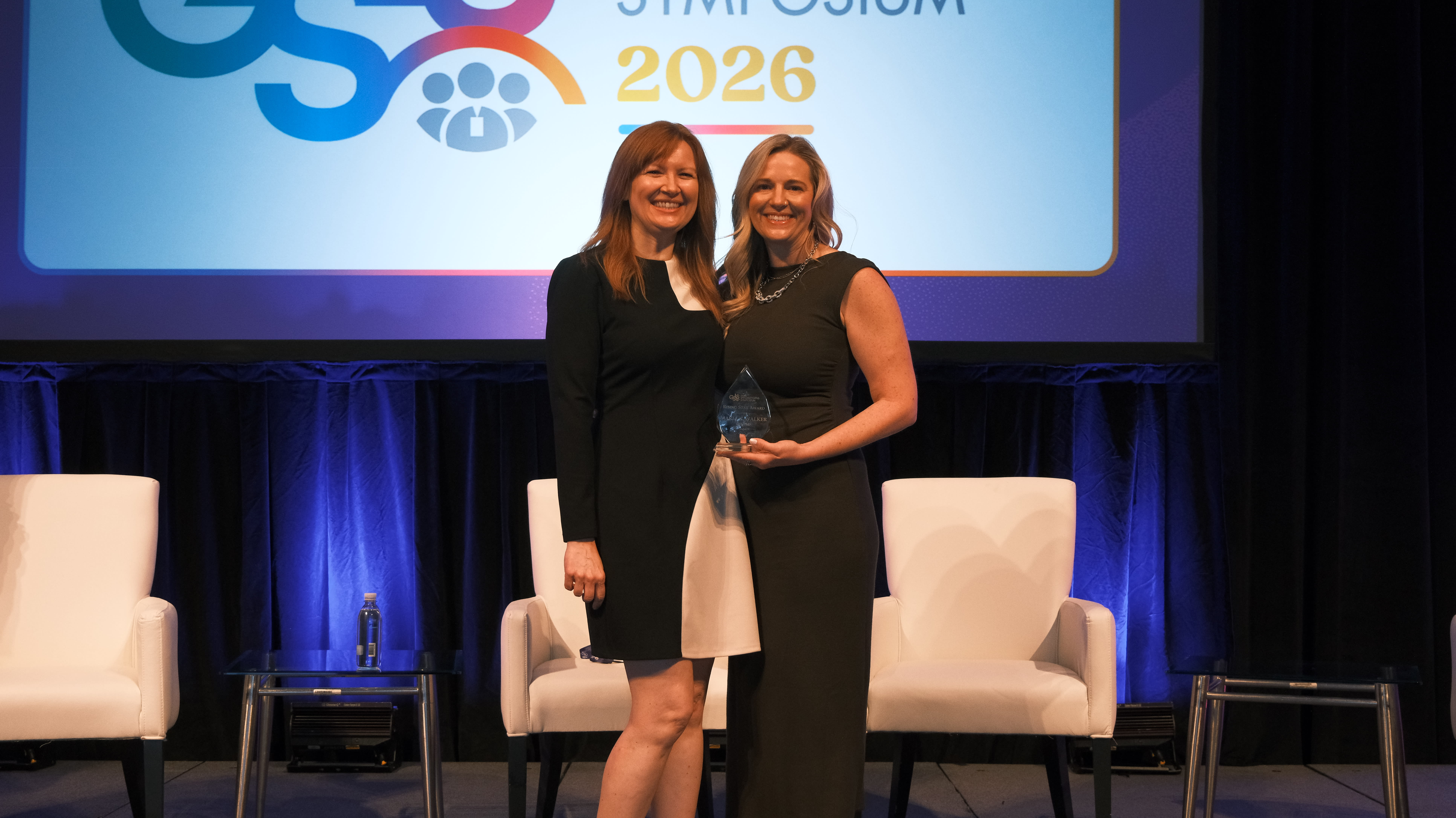
Dr. Walker is an assistant professor at UHCO and runs a research lab studying keratoconus, the tear film, and the effects of scleral lenses. She is also an investigator on the Bifocal Lenses In Nearsighted Kids (BLINK) Study to evaluate the use of soft multifocal contact lenses in reducing myopic progression in children and provides specialty contact lens patient care 2 days per week. She is a fellow in the American Academy of Optometry, past president of the Scleral Lens Education Society, and advisory board member of the GP Lens Institute.
View all the coverage from the 2026 GSLS here.